The Story of the Beginning
A free B2-level English story for language learners, readable online in 7 languages, with an option to listen via the free Storyteller app.
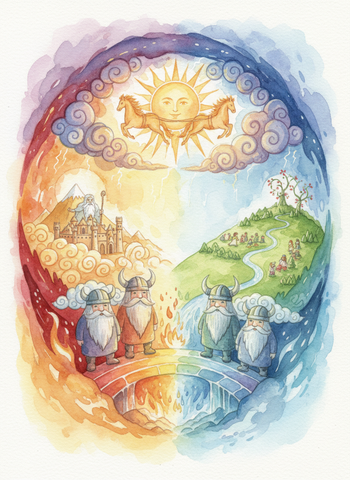
Long before they knew the one true God, the peoples of the north imagined gods and giants behind the sun, the storms, and the sky — and told of ice, fire, and the rise of Asgard and Midgard.
The people who lived long ago, in the far-off lands of the north, watched the wonderful things that happened out of doors every day, just as we do; but they did not know about the one loving God, who is the Father of all, who made them and the world, and rules it by his wise laws; so they thought there must be a great many unseen powers, living in the clouds, in the wind, in the storms, and the sunshine, and doing all those wonders that no man could do.
Những người sống từ thuở xa xưa, ở những vùng đất phương bắc xa xôi, quan sát những điều kỳ diệu xảy ra ngoài trời mỗi ngày, giống như chúng ta vậy; nhưng họ không biết về vị Chúa Trời duy nhất đầy yêu thương, là Cha của muôn loài, người đã tạo ra họ và thế gian, và cai quản nó bằng những quy luật khôn ngoan của mình; vì vậy họ nghĩ rằng hẳn phải có rất nhiều thế lực vô hình, sống trong mây, trong gió, trong bão tố, và ánh nắng mặt trời, và làm nên mọi điều kỳ diệu mà không người phàm nào có thể làm được.
And so those northern people, who were our own forefathers, came to believe in many gods—one for the sun, another for the thunder, another for the flowers, and so on.
Và thế là những người phương bắc ấy, chính là tổ tiên của chúng ta, đã tin vào rất nhiều vị thần—một vị cho mặt trời, một vị khác cho sấm sét, một vị khác nữa cho hoa cỏ, và cứ như thế.
In the long, dark winters, when the bright sun had gone away from them, these northmen had time to think many thoughts about the powers of frost, and wind, and storms, which they called giants, and they used to tell stories and sing songs about the short, bright summer, the thawing out of the streams and lakes, the coming of the birds and flowers.
Trong những mùa đông dài, tối tăm, khi ánh mặt trời rực rỡ đã rời xa họ, những người phương bắc này có thời gian để nghĩ về sức mạnh của băng giá, gió, và bão tố, mà họ gọi là những gã khổng lồ, và họ thường kể chuyện, hát những bài ca về mùa hè ngắn ngủi, tươi sáng, về dòng suối và hồ nước tan băng, về sự trở về của chim chóc và hoa lá.
With great joy the people saw the bright sun-god, Baldur, come back to them in the spring, after the long darkness, and knew that they owed their lives to his friendly warmth and light.
Với niềm vui lớn lao, người dân thấy vị thần mặt trời rực rỡ, Baldur, trở lại với họ vào mùa xuân, sau bóng tối dằng dặc, và biết rằng họ nợ mạng sống mình nơi hơi ấm và ánh sáng thân thiện của ngài.
As we read the stories, or myths, told by those people long ago, we can see that they were meant to tell about the world around us. At first the stories were told and sung from father to son—that is, from one generation to another; but later, when people learned how to write, these myths were written down, and kept with great love and care.
Khi đọc những câu chuyện, hay huyền thoại, được những người xưa kể lại, chúng ta có thể thấy rằng chúng được kể để nói về thế giới quanh ta. Ban đầu những câu chuyện được kể và hát từ cha sang con—nghĩa là, từ thế hệ này sang thế hệ khác; nhưng về sau, khi người ta học được cách viết chữ, những huyền thoại này được ghi chép lại, và được gìn giữ bằng tất cả tình yêu và sự trân trọng.
This is the story they told of the Beginning. At first, before living creatures were in the world, it was all rough and without order. Far to the north it was very cold, for ice and snow were everywhere. Toward the south there was fire, and from the meeting of the fire and the cold a thick vapor was formed, from which sprang a huge giant. On looking about for some food, he saw a cow, who was also searching for something to eat. The ice tasted salt, and when the cow began to lick it, a head appeared, and at last the whole figure of a god stood before her.
Đây là câu chuyện họ kể về Buổi Đầu. Lúc đầu, trước khi có sinh vật sống trên thế gian, mọi thứ đều thô ráp và hỗn độn. Xa về phía bắc thì rất lạnh, vì băng và tuyết phủ khắp nơi. Về phía nam thì có lửa, và từ sự gặp gỡ giữa lửa và giá lạnh, một làn hơi dày đặc đã hình thành, từ đó sinh ra một gã khổng lồ to lớn. Khi tìm kiếm thức ăn, hắn thấy một con bò cái, cũng đang tìm kiếm thứ gì đó để ăn. Băng có vị mặn, và khi con bò bắt đầu liếm nó, một cái đầu hiện ra, rồi cuối cùng cả hình dáng một vị thần đứng trước mặt nó.
From these two, the giant and the god, came the two great races of giants and gods, who were always enemies to each other. The giants were constantly trying to break into Asgard, the home of the gods, in the sky; the gods, on the other hand, watched and planned to keep out the giants, and to drive them back to their own stronghold, Utgard. Our world, where men and women lived, was between Utgard and Asgard; it was called Midgard, and around this Midgard world, under the ocean, was coiled a monstrous serpent, who grew so long that his tail grew down his throat. He was called the Midgard serpent.
Từ hai sinh vật ấy, gã khổng lồ và vị thần, sinh ra hai chủng tộc lớn là giống khổng lồ và giống thần, luôn là kẻ thù của nhau. Bọn khổng lồ liên tục cố xông vào Asgard, quê hương của các vị thần, trên bầu trời; còn các vị thần thì canh chừng và tìm cách ngăn chặn bọn khổng lồ, đẩy lùi chúng về pháo đài riêng của chúng, Utgard. Thế giới của chúng ta, nơi con người sinh sống, nằm giữa Utgard và Asgard; nó được gọi là Midgard, và quanh thế giới Midgard này, dưới đại dương, một con rắn khổng lồ quái dị cuộn tròn mình, dài đến mức đuôi nó chạm cả vào cổ họng. Nó được gọi là rắn Midgard.
A wonderful tree, named "Yggdrasil," connected all the worlds. This great ash tree had its roots in Utgard, and the tops of its branches reached up so high as to overshadow Asgard. Its three main roots were watered by three fountains, and near one of them sat the wise giant Mimir, of whom we shall hear later. The Norns, three sisters, also lived at the roots of Yggdrasil, and were careful to see that it was watered every day.
Một cây thần kỳ diệu, tên là "Yggdrasil," nối liền tất cả các thế giới. Cây tần bì lớn này có rễ ở Utgard, và ngọn cành của nó vươn cao đến mức che bóng cả Asgard. Ba rễ chính của nó được ba con suối tưới nước, và gần một trong số đó ngồi vị khổng lồ thông thái Mimir, mà chúng ta sẽ nghe kể sau. Ba chị em Norns cũng sống ở gốc rễ Yggdrasil, và luôn cẩn thận đảm bảo cây được tưới nước mỗi ngày.
A little gray squirrel was always running up and down the tree, jerking his tail and hurrying to tell the news to every one along the way. He was so anxious to be the first one to carry the news, that many times he brought trouble to himself and to others, because he was not always careful to tell a story just as he had heard it, and often every one would have been happier if the squirrel had kept the story quite to himself.
Một chú sóc xám nhỏ luôn chạy lên chạy xuống trên cây, ngoáy đuôi và vội vã đi loan tin cho mọi người dọc đường. Nó luôn nôn nóng muốn là người đầu tiên mang tin đi, đến nỗi nhiều lần chính nó lại gây ra rắc rối cho bản thân và cho người khác, vì nó không phải lúc nào cũng cẩn thận kể lại câu chuyện đúng như những gì nó đã nghe, và thường thì mọi người sẽ vui vẻ hơn nhiều nếu chú sóc cứ giữ câu chuyện cho riêng mình.
The gods and goddesses, all together, were called the Aesir, and the chief and father of them all was Odin. His lofty throne rose high in the midst of Asgard, the sacred city, which the gods had built for their beautiful home.
Các vị thần và nữ thần, tất cả gộp lại, được gọi là Aesir, và người đứng đầu, cũng là cha của tất cả, là Odin. Ngai vàng cao vời vợi của ngài sừng sững giữa Asgard, thành phố linh thiêng mà các vị thần đã xây nên làm mái nhà tráng lệ của mình.
From Asgard, arching over and down to the lower world, was a rainbow bridge, called Bifröst—"the trembling bridge"; upon this the dwellers in Asgard could travel every day, all except the mighty Thor. His thunder chariot was too heavy for "the trembling bridge," so he had to go around a longer way.
Từ Asgard, vươn cong xuống thế giới thấp hơn, có một cây cầu cầu vồng, gọi là Bifröst—"cây cầu rung." Trên đó, những cư dân của Asgard có thể đi lại mỗi ngày, ngoại trừ thần Thor hùng mạnh. Cỗ xe sấm sét của ngài quá nặng đối với "cây cầu rung," nên ngài phải đi vòng theo con đường xa hơn.
After the gods had made men and women, and had taught them to dwell on the earth, in the world of Midgard, Odin looked forth one morning from his heavenly seat, to see what further work was waiting for his helping hand.
Sau khi các vị thần tạo ra con người, và dạy họ sống trên mặt đất, trong thế giới Midgard, một buổi sáng Odin nhìn xuống từ ngai vàng trên trời, để xem còn công việc gì đang chờ đợi bàn tay giúp đỡ của mình.
He noticed, far away below him, a race of small beings, some of them busy, doing mischievous deeds, while others sat idle, doing nothing. Odin sent for all these little people to come to him, and when they had reached Asgard, and were admitted to his palace of Gladsheim, they entered the great judgment hall, where they found all the Aesir sitting, with Father Odin at their head.
Ngài để ý, xa xa bên dưới mình, có một giống loài bé nhỏ, có kẻ bận rộn làm những việc tinh quái, trong khi những kẻ khác thì ngồi không, chẳng làm gì cả. Odin cho gọi tất cả những người tí hon này đến trước mặt mình, và khi họ đã đến được Asgard, được cho vào cung điện Gladsheim của ngài, họ bước vào đại sảnh phán xét lớn, nơi họ thấy tất cả các vị thần Aesir đang ngồi, với Cha Odin ở vị trí cao nhất.
The little people waited in a crowd near the door, wondering what was going to happen to them, while Hermod, the messenger of the gods, ran to his master to say that they had come.
Những người tí hon đứng chờ thành một đám đông gần cửa, tự hỏi chuyện gì sẽ xảy đến với mình, trong khi Hermod, sứ giả của các vị thần, chạy đến báo với chủ nhân rằng họ đã đến.
Then the Allfather spoke to the little dwarfs about their evil deeds among men, and he told the naughtiest ones that they must go and live down underground, and look after the great furnace fire in the middle of the earth, to keep it always burning. Some must get coal to feed the fire, and others still were to have charge of the gold, and silver, and precious stones, under the rocks. Not one of these busy dwarfs must ever appear during the day; only by night might they venture to leave their tasks.
Rồi Đấng Cha Toàn Năng nói với các chú lùn về những việc xấu xa họ đã làm giữa loài người, và ngài bảo những kẻ nghịch ngợm nhất phải xuống sống dưới lòng đất, trông coi ngọn lửa lò rèn lớn ở giữa trái đất, giữ cho nó luôn cháy. Một số phải đi lấy than để nuôi lửa, một số khác thì được giao trông coi vàng, bạc, và đá quý, dưới các tảng đá. Không một chú lùn cần mẫn nào trong số này được phép xuất hiện ban ngày; chỉ vào ban đêm họ mới được rời khỏi công việc của mình.
"And now," said Odin, turning to the idle ones, "what have you been doing?"
"Và bây giờ," Odin nói, quay sang những kẻ lười biếng, "các ngươi đã làm gì rồi?"
"We were doing nothing at all, so we could not have harmed any one, and we pray you to spare us!" cried they.
"Chúng con chẳng làm gì cả, nên không thể đã hại ai được, và chúng con cầu xin ngài tha cho chúng con!" chúng kêu lên.
"Do you not know that those who sit idle when they should be doing good deserve punishment, too?" said Odin. "I shall put you in charge of all the trees and flowers, and shall send one of the Aesir to teach you, so that you may be doing some good in the world."
"Các ngươi không biết rằng kẻ ngồi không khi lẽ ra phải làm điều tốt cũng đáng bị trừng phạt sao?" Odin nói. "Ta sẽ giao cho các ngươi trông coi tất cả cây cối và hoa lá, và sẽ cử một vị thần Aesir đến dạy các ngươi, để các ngươi có thể làm điều tốt cho thế gian."
Then the little elves went to work among the flowers, and Frey, the bright god of summer and sunshine, was a kind master to them. He taught them how to open the folded buds in the sunshine, to fill the honey cups, and lead the bees along the flower passages to find their food, to hatch the birds' eggs, and teach the little ones their songs, and then each night to fetch the water for dewdrops, to be hung on every leaf and blade of grass.
Thế là các chú tiên nhỏ bắt đầu làm việc giữa muôn hoa, và Frey, vị thần tươi sáng của mùa hè và ánh nắng, là một người chủ tốt bụng với họ. Ngài dạy họ cách mở những nụ hoa còn khép trong nắng, rót đầy những chén mật, dẫn đàn ong đi qua các lối hoa để tìm thức ăn, ấp trứng chim, và dạy những chú chim non hót, rồi mỗi đêm đi lấy nước làm sương, để treo lên từng chiếc lá, từng ngọn cỏ.
When their work was finished, and the moon had risen, these busy elves and fairies enjoyed many a happy evening, dancing and frisking on the green by moonlight. And so our world of Midgard was filled with busy work and play.
Khi công việc đã xong, và trăng đã lên, những nàng tiên và yêu tinh chăm chỉ này tận hưởng nhiều buổi tối vui vẻ, nhảy múa và tung tăng trên bãi cỏ dưới ánh trăng. Và thế là thế giới Midgard của chúng ta tràn ngập cả công việc lẫn vui chơi.
Even now, in our time, the people in the lands of the north, and in Germany, have many old sayings and stories that have come down to them from the days long ago. There is a beautiful white flower in the north, which is called Baldur's Brow, because it is so pure and bright, like the face of the dear sun-god, Baldur; and in some places, when the farmers gather in their harvest of grain, they leave a little bunch of it standing in the field, for Father Odin's horse.
Ngay cả bây giờ, trong thời đại chúng ta, người dân ở các vùng đất phương bắc, và ở Đức, vẫn còn nhiều câu nói và câu chuyện xưa được lưu truyền từ những ngày xa xưa ấy. Có một loài hoa trắng đẹp ở phương bắc, được gọi là Lông Mày Baldur, vì nó thuần khiết và tươi sáng, như gương mặt của vị thần mặt trời thân yêu, Baldur; và ở một số nơi, khi nông dân thu hoạch lúa, họ để lại một bó nhỏ đứng nguyên trên cánh đồng, dành cho con ngựa của Cha Odin.
We have some English names to remind us of those old tales of our forefathers, for we have Tuesday named for Tyr, or Tiu, the brave god who gave his right hand to save his friends; Wednesday, or Wodensday, named for Odin; Thursday, for Thor, the thunder-god; and Friday, for either the goddess Frigga, or Freyja, or for Frey, the god of summer, who ruled the fairies.
Chúng ta có một số tên tiếng Anh để nhắc nhở chúng ta về những câu chuyện xưa của tổ tiên, vì chúng ta có ngày Tuesday đặt theo tên Tyr, hay Tiu, vị thần dũng cảm đã hy sinh tay phải của mình để cứu bạn bè; ngày Wednesday, hay Wodensday, đặt theo tên Odin; ngày Thursday, theo tên Thor, thần sấm sét; và ngày Friday, theo tên nữ thần Frigga, hoặc Freyja, hoặc theo tên Frey, vị thần mùa hè, người cai quản các nàng tiên.
