The Ghostwriter's Chapter
قصة إنجليزية مجانية بالمستوى B2 لمتعلمي اللغات، يمكن قراءتها على الإنترنت بلغات عددها 8، مع إمكانية الاستماع إليها عبر تطبيق Storyteller المجاني.
A ghostwriter argues with a retired football coach who wants to cut the most honest chapter from his memoir.
انتهى المقطع التجريبي! استمع إلى القصة كاملة في تطبيق Storyteller المجاني. حمّل التطبيق
الصوت غير متاح الآن.
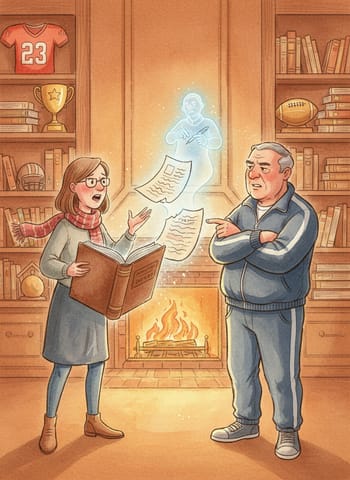
Dafne has been working with Jens for five months, and she knows his habits by now. He drinks his tea cold. He answers her questions with a short nod, as if every one of them were a referee's decision. And he writes in the margins in thick red pen, always in capitals. Today, beside the title of chapter nine, he has written a single word: CUT.
تعمل دافنه مع ينس منذ خمسة أشهر، وقد صارت تعرف عاداته. فهو يشرب شايه باردًا. ويجيب عن أسئلتها بإيماءة قصيرة من رأسه، كأن كل سؤال منها قرار حكم. ويكتب في الهوامش بقلم أحمر غليظ وبخط كبير دائمًا. واليوم كتب بجانب عنوان الفصل التاسع كلمة واحدة: «احذف».
Chapter nine is called "The Winter Without a Win." It covers the season, forty years ago, when his youth team lost twelve matches in a row. Dafne has spent two weeks on it, working from a biscuit tin of old scoresheets that has never been shown to anyone. Each sheet is marked in his handwriting with the date, the score and the weather.
عنوان الفصل التاسع «الشتاء بلا فوز». يتناول الموسم الذي مضى عليه أربعون عامًا، حين خسر فريقه من الناشئين اثنتي عشرة مباراة متتالية. أمضت دافنه أسبوعين في هذا الفصل، تعمل على علبة بسكويت معدنية مليئة بأوراق نتائج قديمة لم تُعرض على أحد قط. وعلى كل ورقة، بخطه، التاريخ والنتيجة والطقس.
"Nobody wants to read about losing," Jens says, stirring his tea. "People buy a coach's book to read about the cups."
«لا أحد يريد أن يقرأ عن الخسارة»، يقول ينس وهو يقلب شايه. «الناس يشترون كتاب المدرب ليقرؤوا عن الكؤوس.»
"People buy a coach's book to find out who he is," Dafne says. "May I tell you what I think?"
«الناس يشترون كتاب المدرب ليعرفوا من يكون»، تقول دافنه. «هل تسمح لي بأن أقول ما أظن؟»
He shrugs, which she has learned means yes.
يهز كتفيه، وقد تعلمت أن هذا يعني نعم.
"The cup chapters are good, but they could have been written about anyone. If a stranger had won those games, the sentences would be the same. This is the only chapter where you sound like a man who is afraid." She turns the page toward him. "You wrote that you stood in the cold after the twelfth defeat and told the boys you were proud of them. And that you didn't know whether it was true."
«فصول الكؤوس جيدة، لكن كان يمكن أن تُكتب عن أي شخص. لو فاز غريب بتلك المباريات لجاءت الجمل نفسها. هذا هو الفصل الوحيد الذي تبدو فيه كرجل خائف.» تدير الصفحة نحوه. «كتبتَ أنك وقفت في البرد بعد الهزيمة الثانية عشرة وقلت للأولاد إنك فخور بهم. وأنك لم تكن تعرف إن كان ذلك صحيحًا.»
Jens looks out of the window. Outside, a neighbor's children are kicking a ball against a garage door, over and over, the sound as steady as a clock.
ينظر ينس من النافذة. في الخارج يركل أطفال أحد الجيران كرة على باب مرآب، مرة تلو أخرى، وصوتها رتيب كدقات الساعة.
"That's private," he says. "If I print it, the boys will read it. Some of them are grandfathers now."
«هذا شأن خاص»، يقول. «لو طبعته فسيقرؤه الأولاد. وبعضهم أصبحوا أجدادًا الآن.»
"They will read what you wrote," Dafne says. "They will also find out that somebody remembered what that winter was like for them. You remember the weather, Jens. Every match. Rain, sleet, wind from the east. You couldn't have kept such records if you hadn't cared."
«سيقرؤون ما كتبتَ»، تقول دافنه. «وسيعرفون أيضًا أن أحدًا تذكر كيف كان ذلك الشتاء بالنسبة إليهم. أنت تتذكر الطقس يا ينس. في كل مباراة. مطر وثلج ذائب ورياح من الشرق. ما كنتَ لتحتفظ بسجلات كهذه لو لم تكن تهتم.»
He is silent for a long time. Dafne had been expecting an argument, perhaps even a raised voice. She has prepared herself to lose this one, although she would hate to.
يصمت طويلًا. كانت دافنه تتوقع جدالًا، وربما صوتًا مرتفعًا. وقد هيأت نفسها لأن تخسر هذه الجولة، مع أنها ستكره ذلك كثيرًا.
"My wife used to say the same thing," he says at last. "She said I only kept the records of the games that hurt." He pulls the page toward him, uncaps the red pen and holds it above the paper.
«كانت زوجتي تقول الشيء نفسه»، يقول أخيرًا. «كانت تقول إنني لا أحتفظ إلا بسجلات المباريات التي آلمتني.» يسحب الصفحة نحوه، ويرفع غطاء القلم الأحمر، ويحمله فوق الورقة.
Dafne tries not to watch his hand. She looks at the window, at the children and their ball, at anything else.
تحاول دافنه ألا تراقب يده. تنظر إلى النافذة، إلى الأطفال وكرتهم، إلى أي شيء آخر.
When she looks back, the word CUT has a line through it, thick and straight. Beneath it, in the same red capitals, Jens has written another word: KEEP.
وحين تنظر إلى الصفحة ثانية، تجد كلمة «احذف» وقد شُطب عليها بخط غليظ مستقيم. وتحتها، بالخط الأحمر الكبير نفسه، كتب ينس كلمة أخرى: «أبقِ».
He slides the page across the table. "Fix the ending," he says. "It's far too kind to me."
يدفع الصفحة عبر الطاولة نحوها. «أصلحي النهاية»، يقول. «إنها رحيمة بي أكثر مما ينبغي.»