Lot Forty-One, a Scarf from the Night Boats
قصة إنجليزية مجانية بالمستوى B2 لمتعلمي اللغات، يمكن قراءتها على الإنترنت بلغات عددها 8، مع إمكانية الاستماع إليها عبر تطبيق Storyteller المجاني.
A deckhand who knits on night watches enters his best scarf in the harbour fish auction, and it takes two attempts to find the right way to offer it.
انتهى المقطع التجريبي! استمع إلى القصة كاملة في تطبيق Storyteller المجاني. حمّل التطبيق
الصوت غير متاح الآن.
The auction at the harbour begins before the sun is properly up, in a long concrete hall that smells of salt, diesel and wet ice. Boxes of fish stand in rows on the floor, silver and glassy-eyed, each with a numbered card tucked under the lid. Buyers walk slowly between them with their hands in their pockets, pretending not to be interested.
يبدأ المزاد في الميناء قبل أن تشرق الشمس تمامًا، في قاعة خرسانية طويلة تفوح منها رائحة الملح والديزل والثلج المبلل. صناديق السمك مصفوفة في صفوف على الأرضية، فضية زجاجية العيون، وفي كل منها بطاقة مرقمة مدسوسة تحت الغطاء. ويمشي المشترون ببطء بينها وأيديهم في جيوبهم، متظاهرين بأنهم غير مهتمين.
Vasco stands at the high desk at the end of the hall. He is the auctioneer's clerk, which means he keeps the list and holds the bell. On mornings when the real auctioneer has a cold, he does the shouting too. Today the real auctioneer has a cold. Vasco has been awake since four, and his voice has the rough, flat edge of a man who has not yet had breakfast.
يقف فاسكو عند المكتب العالي في آخر القاعة. إنه كاتب الدلّال، أي أنه يمسك القائمة ويحمل الجرس. وفي الصباحات التي يصاب فيها الدلّال الحقيقي بالزكام، يتولى هو الصياح أيضًا. واليوم أصيب الدلّال الحقيقي بالزكام. وفاسكو مستيقظ منذ الرابعة، وفي صوته الخشونة الجافة لرجل لم يتناول فطوره بعد.
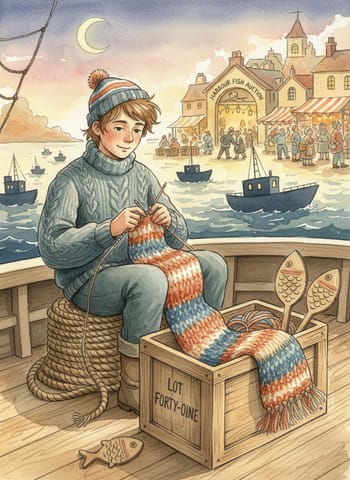
Uri arrives at twenty past five, carrying something under his arm. He is a deckhand from one of the night boats, a broad, quiet man with salt-cracked knuckles. Usually he goes straight home to sleep after unloading. This morning he stops in front of the desk and puts a roll of wool on the wood.
يصل أوري في الخامسة والنصف إلا عشر دقائق، حاملًا شيئًا تحت ذراعه. إنه عامل على سطح أحد قوارب الليل، رجل عريض هادئ، مفاصل أصابعه متشققة من الملح. وعادةً يذهب مباشرة إلى بيته لينام بعد تفريغ الحمولة. لكنه هذا الصباح يتوقف أمام المكتب ويضع لفة من الصوف على الخشب.
"I would like to enter a lot," he says.
«أود أن أُدرج قطعة في المزاد»، يقول.
Vasco looks at the roll. It unrolls a little on its own, and he sees that it is a scarf. It is very long, knitted in a close grey-blue pattern like the surface of the sea.
ينظر فاسكو إلى اللفة. وتنفرد قليلًا من تلقاء نفسها، فيرى أنها وشاح. وشاح طويل جدًا، منسوج بنقش رمادي مزرق متراص كسطح البحر.
"We sell fish," Vasco says.
«نحن نبيع السمك»، يقول فاسكو.
"I know. But the rules say anything can be entered if the owner pays the fee." Uri pushes a coin across the desk. "It is a good scarf. I made it myself."
«أعرف. لكن القواعد تقول إن أي شيء يمكن إدراجه إذا دفع صاحبه الرسم.» يدفع أوري عملة معدنية عبر المكتب. «إنه وشاح جيد. صنعته بنفسي.»
"On the boat?"
«على القارب؟»
"On the night watches. Two hours each, when the engine is steady and there is nothing to do but look at the dark. The needles keep my hands busy." Uri shrugs, a little embarrassed. "I have knitted nine of these. I give most of them away. But this one is the best, and I would like to see what it is worth."
«في نوبات الليل. ساعتان كل نوبة، حين يكون المحرك ثابتًا ولا شيء يُفعل سوى النظر إلى الظلام. الإبر تُبقي يديّ مشغولتين.» يهز أوري كتفيه، وقد أصابه بعض الحرج. «نسجت تسعة وشاحات كهذا. وأهدي معظمها. لكن هذا أفضلها، وأريد أن أعرف كم يساوي.»
"Who is it for?"
«لمن هو؟»
"Nobody in particular," Uri says. "That is the point."
«لا لأحد بعينه»، يقول أوري. «وهذا هو المقصود.»
Vasco has worked at the harbour for nineteen years, and he has learned that some questions are better not to ask twice. He writes the entry in his book: LOT 41, ONE SCARF, WOOL. Then he sets it on the end of a table between a crate of mackerel and a box of brown crabs. The crabs are still moving their claws, very slowly, in the cold.
يعمل فاسكو في الميناء منذ تسع عشرة سنة، وقد تعلم أن بعض الأسئلة الأفضل ألا تُطرح مرتين. فيكتب في دفتره: القطعة 41، وشاح واحد، صوف. ثم يضعه عند طرف طاولة بين صندوق من الإسقمري وصندوق من السلطعونات البنية. وما زالت السلطعونات تحرك مخالبها ببطء شديد في البرد.
At six o'clock the bell rings and the buyers gather. Lot after lot goes by in a rapid chant of numbers. Vasco keeps his eyes on the paper, but when he reaches forty-one, he cannot stop himself from hesitating.
في السادسة يدق الجرس ويتجمع المشترون. وتمر القطع واحدة تلو الأخرى في مناداة سريعة بالأرقام. يبقي فاسكو عينيه على الورقة، لكنه حين يصل إلى الحادية والأربعين لا يستطيع منع نفسه من التردد.
"Lot forty-one," he calls. "One scarf. Hand-knitted. Who will start me at ten?"
«القطعة الحادية والأربعون»، ينادي. «وشاح واحد. منسوج باليد. من يبدأ المزايدة بعشرة؟»
For a moment the hall is entirely silent. Then somebody at the back begins to laugh. It is a friendly laugh, not a cruel one, but it spreads through the room like a draught. Soon half the buyers are grinning at each other.
يسود القاعة صمت تام لحظة. ثم يبدأ أحدهم في الخلف يضحك. ضحكة ودودة، لا قاسية، لكنها تنتشر في القاعة كتيار هواء. وسرعان ما صار نصف المشترين يبتسمون لبعضهم.
"What does it catch?" a man calls. "Is it for the crabs?"
«ماذا يصطاد؟» ينادي رجل. «هل هو للسلطعونات؟»
"A coin," another man says. "I bid a coin."
«عملة معدنية»، يقول رجل آخر. «أعرض عملة معدنية.»
"One coin," Vasco says, flatly. "Do I hear two?"
«عملة واحدة»، يقول فاسكو بنبرة جافة. «هل من عرض بعملتين؟»
Nobody does. The bell rings, and the scarf is sold for the price of a cup of coffee to a restaurant cook who does not want it. The buyers return to the mackerel. Uri stands at the edge of the hall with his hands behind his back. He does not say anything. The cook tries to hand the scarf back with a half-apologetic smile. Uri nods once and takes it, and then walks out into the pale light on the quay.
لا أحد يعرض. يدق الجرس، ويُباع الوشاح بثمن فنجان قهوة لطاهٍ في أحد المطاعم لا يريده. ويعود المشترون إلى الإسقمري. يقف أوري عند طرف القاعة ويداه خلف ظهره. لا يقول شيئًا. يحاول الطاهي أن يعيد الوشاح إليه بابتسامة معتذرة نصف اعتذار. يومئ أوري مرة واحدة ويأخذه، ثم يخرج إلى الضوء الشاحب على الرصيف.
Vasco watches him go. He is not a sentimental man, but he has a bad conscience, and a bad conscience at six in the morning is difficult to ignore. He finishes the auction in a daze. When the last box has been carried away, the hall is empty except for the noise of the hoses. He takes off his apron and goes to look for Uri.
يراقبه فاسكو وهو يذهب. ليس رجلًا عاطفيًا، لكن ضميره يؤنبه، وتأنيب الضمير في السادسة صباحًا يصعب تجاهله. فينهي المزاد شارد الذهن. وحين يُحمل آخر صندوق، تصبح القاعة خالية إلا من ضجيج الخراطيم. فيخلع مئزره ويذهب يبحث عن أوري.
He finds him sitting on a bollard at the end of the quay, with the scarf folded on his knees.
يجده جالسًا على عمود الربط في طرف الرصيف، والوشاح مطوي على ركبتيه.
"The mistake was mine," Vasco says. "We put it among the fish, and fish are priced by weight. Nobody knows how to price a scarf in that room."
«الخطأ خطئي»، يقول فاسكو. «وضعناه بين السمك، والسمك يُسعَّر بالوزن. لا أحد يعرف كيف يسعّر وشاحًا في تلك القاعة.»
"Nobody wants a scarf," Uri says. "It is fine."
«لا أحد يريد وشاحًا»، يقول أوري. «لا بأس.»
"That is not true. Nobody wants a scarf that is presented as a joke. It is different if they understand what it is." Vasco sits down beside him on the cold concrete. "What if we do it again, tomorrow, but not the same way? No bell. No lot number. You tell them what you told me."
«هذا غير صحيح. لا أحد يريد وشاحًا يُعرض كأنه نكتة. الأمر يختلف إن فهموا ما هو.» يجلس فاسكو بجانبه على الخرسانة الباردة. «ماذا لو أعدنا ذلك غدًا، لكن ليس بالطريقة نفسها؟ دون جرس. ودون رقم قطعة. تخبرهم بما أخبرتني به.»
"That I made it on night watches?"
«أنني صنعته في نوبات الليل؟»
"That you made it for whoever needs it. And you do not sell it for money. You give it to the person who asks for it first."
«أنك صنعته لمن يحتاج إليه. ولا تبيعه بالمال. تعطيه لأول من يطلبه.»
Uri turns the idea over for a long time. A gull lands on the bollard, considers them both and leaves.
يقلّب أوري الفكرة طويلًا. تحط نورسة على العمود، وتتأملهما معًا ثم ترحل.
"All right," he says.
«حسنًا»، يقول.
The next morning, before the first bell, Vasco clears a space at the end of the hall. He puts down no table and no card. When the buyers arrive, Uri stands in front of them holding the scarf, and he speaks slowly, in his low voice, without looking at anyone.
في الصباح التالي، قبل الجرس الأول، يخلي فاسكو مكانًا في طرف القاعة. لا يضع طاولة ولا بطاقة. وحين يصل المشترون، يقف أوري أمامهم ممسكًا بالوشاح، ويتكلم ببطء، بصوته المنخفض، دون أن ينظر إلى أحد.
He says that he made it on the boat, two hours a night, for sixteen nights. He says that he has no sister or mother who needs it, and that he did not make it for anybody he knows. He says that anyone who is cold at work may ask for it, and that nobody has to pay.
يقول إنه صنعه على القارب، ساعتين كل ليلة، طوال ست عشرة ليلة. ويقول إنه ليس عنده أخت ولا أم تحتاج إليه، وإنه لم يصنعه لأحد يعرفه. ويقول إن كل من يشعر بالبرد في عمله يمكنه أن يطلبه، وإن أحدًا لا يلزمه أن يدفع.
This time nobody laughs.
وهذه المرة لا يضحك أحد.
A buyer in a white apron looks at his shoes. Another coughs and pretends to read his list. For a long time the only sound is the soft, constant drip of melting ice from the boxes.
ينظر مشترٍ يلبس مئزرًا أبيض إلى حذائه. ويسعل آخر ويتظاهر بقراءة قائمته. ولوقت طويل لا يُسمع إلا قطرات الثلج الذائب الناعمة المتواصلة من الصناديق.
Then a voice from the side door says, "I would like it, if that is allowed."
ثم يقول صوت من الباب الجانبي: «أريده، إن كان ذلك مسموحًا.»
It belongs to a young woman in a thin jacket, who works the ice machine at the back of the hall. She has stood in its white breath every morning for a year, and nobody has ever thought to ask whether she was warm. She stands in the doorway with her arms folded tightly against her ribs, as if she is not sure she should have spoken.
صاحبه شابة في سترة رقيقة، تشغّل آلة الثلج في مؤخرة القاعة. وقفت في نفسها الأبيض كل صباح منذ عام، ولم يخطر لأحد قط أن يسألها هل هي دافئة. تقف في المدخل عاقدة ذراعيها بإحكام على ضلوعها، كأنها ليست متأكدة من أنه كان ينبغي لها أن تتكلم.
Uri walks across the hall without hurrying. The buyers part to let him through, and nobody says a word. He stops in front of her, shakes out the long grey-blue wool, and lifts it over her head.
يعبر أوري القاعة دون استعجال. ينفسح له المشترون، ولا يقول أحد كلمة. يتوقف أمامها، وينفض الصوف الرمادي المزرق الطويل، ويرفعه فوق رأسها.
Then he winds it twice around her neck, and tucks in the ends.
ثم يلفه حول عنقها مرتين، ويدس طرفيه.