The Last Water Crossing
A free B2-level English story for language learners, readable online in English, with an option to listen via the free Storyteller app.
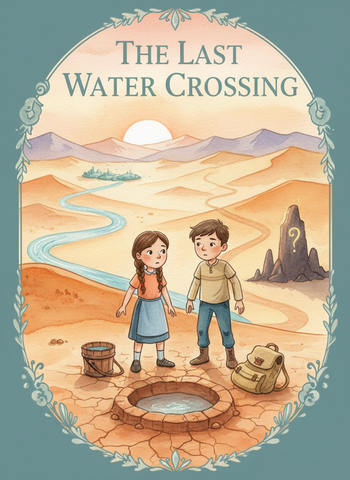
When their buried water cache turns out to be missing deep in the desert, Ingrid and Bram must weigh a longer route against a closer, uncertain one.
Ingrid checked the map again, though she already knew what it would tell her. The next reliable water source was eleven kilometers away, and the cache they had buried two weeks earlier should have been six.
"It's not here," Bram said, still digging at the marked spot with his hands. "Either we buried it wrong, or somebody else found it."
They had been walking since before sunrise to avoid the worst heat, and both of their bottles were down to less than a liter. If they pushed on to the next source without finding the cache, they would be crossing the hottest part of the day on almost nothing.
"We have two choices," Ingrid said, trying to keep her voice steady. "We ration what we have and go for the eleven kilometers. Or we backtrack four kilometers to that dry wash and hope it's holding water after last month's storm."
Bram looked at the horizon, where heat was already rising off the sand in visible waves. "If we'd checked the wash on the way out, we'd know for certain. We didn't, so it's a gamble either way."
"The wash is closer," Ingrid said. "If we go and it's dry, we've lost time but we can still make the eleven kilometers before dark. If we go straight for the eleven and we're wrong about our pace, we won't have a backup."
Bram nodded slowly. "The wash, then. Slower and surer."
They turned off the main route, moving carefully now to keep their bodies from overheating, resting in every patch of shade a rock formation offered. Two hours later, they reached the wash and found a shallow pool, cloudy but real, collected in a hollow of stone.
"I could cry," Bram said, already filtering water into his bottle.
"Save the tears. We still have eleven kilometers to walk," Ingrid said, though she was smiling for the first time all morning.
They refilled everything they carried and rested until the worst heat passed. Then they set off again, with water enough, finally, to trust the distance ahead of them.
