The Tin of Buttons at the Coin Shop
قصة إنجليزية مجانية بالمستوى B1 لمتعلمي اللغات، يمكن قراءتها على الإنترنت بلغات عددها 8، مع إمكانية الاستماع إليها عبر تطبيق Storyteller المجاني.
A teenager who works in a small shop must decide what to do with a tin of old buttons that carry a tailor's notes.
انتهى المقطع التجريبي! استمع إلى القصة كاملة في تطبيق Storyteller المجاني. حمّل التطبيق
الصوت غير متاح الآن.
The shop was called Hendrik's Stamps and Coins, and it was smaller than most people's kitchens. Glass cases ran along both walls. Behind the counter, a hundred tiny drawers held paper squares, silver rounds and little magnifying glasses. Salma had worked there on Saturdays since the start of the school year.
كان المتجر يُسمى «هندريك للطوابع والعملات»، وكان أصغر من مطابخ معظم الناس. كانت خزائن زجاجية تمتد على طول الجدارين. وخلف الطاولة، كانت مئة درج صغير تحمل مربعات ورقية وقطعًا فضية مستديرة وعدسات مكبرة صغيرة. وكانت سلمى تعمل هناك أيام السبت منذ بداية العام الدراسي.
She liked the quiet. She liked the way Hendrik talked to customers as if each one had come from a faraway country. Most of all, she liked that nobody in the shop ever asked her what she wanted to be.
أحبت الهدوء. وأحبت الطريقة التي يتحدث بها هندريك إلى الزبائن كأن كلًّا منهم جاء من بلد بعيد. وأكثر من كل ذلك، أحبت أن أحدًا في المتجر لم يسألها قط ماذا تريد أن تصبح.
On the last Saturday of spring, a woman in a green coat pushed open the door. She carried a round biscuit tin with a faded picture of a lighthouse on the lid.
في آخر يوم سبت من الربيع، دفعت امرأة في معطف أخضر الباب. وكانت تحمل علبة بسكويت مستديرة عليها صورة باهتة لمنارة على الغطاء.
"I am clearing a cupboard," the woman said. "These were my neighbour's. She asked me to sell them to someone who will care."
«أنا أفرغ خزانة»، قالت المرأة. «هذه كانت لجارتي. طلبت مني أن أبيعها لشخص سيعتني بها.»
"What are they?" Hendrik asked.
«ما هي؟» سأل هندريك.
"Buttons. Hundreds of them."
«أزرار. مئات منها.»
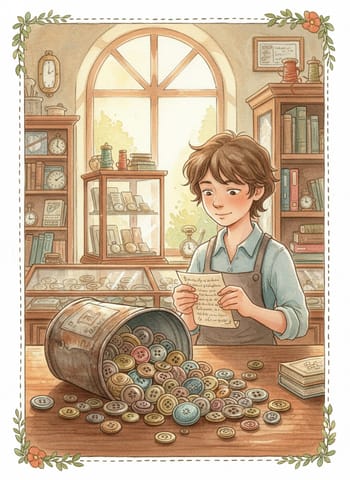
She set the tin on the counter and opened it. Salma leaned forward. The buttons lay in the tin like a small, loud crowd. Some were glass, some were wood, and some were dull metal with tiny anchors on them. A few were as big as coins, and a few were smaller than her fingernail.
وضعت العلبة على الطاولة وفتحتها. انحنت سلمى إلى الأمام. كانت الأزرار ترقد في العلبة كحشد صغير صاخب. بعضها من الزجاج، وبعضها من الخشب، وبعضها من معدن باهت عليه مراسٍ صغيرة. وبعضها بحجم العملات، وبعضها أصغر من ظفرها.
Hendrik picked one up with tweezers and turned it under the lamp. "I am not an expert in buttons," he said. "But I know someone who is. May I keep the tin for the afternoon?"
التقط هندريك واحدًا بملقط وأداره تحت المصباح. «لست خبيرًا في الأزرار»، قال. «لكنني أعرف من هو خبير. هل يمكنني أن أحتفظ بالعلبة بعد الظهر؟»
"Of course," the woman said. "I will come back on Monday."
«بالطبع»، قالت المرأة. «سأعود يوم الاثنين.»
When she left, Hendrik pushed the tin across the counter. "Salma, I have a job for you. Sort these, and tell me what you think we should do with them."
وحين غادرت، دفع هندريك العلبة عبر الطاولة. «سلمى، لدي مهمة لك. افرزي هذه، وقولي لي رأيك فيما ينبغي أن نفعله بها.»
"What do you mean, what we should do?"
«ماذا تعني بما ينبغي أن نفعله؟»
"We have two good choices. I will explain after you look." He smiled. "I want to hear what you notice before I tell you what I think."
«لدينا خياران جيدان. سأشرح بعد أن تنظري.» ابتسم. «أريد أن أسمع ما تلاحظينه قبل أن أقول لك ما أراه.»
Salma spread a white cloth on the table in the back. She tipped the buttons out and began to sort them into piles by material. Glass, wood, shell, metal. It was slow work, but she found it calming.
فرشت سلمى قطعة قماش بيضاء على الطاولة في الخلف. أفرغت الأزرار وبدأت تفرزها في أكوام حسب المادة. زجاج، خشب، صدف، معدن. كان عملًا بطيئًا، لكنها وجدته مهدّئًا.
At the bottom of the tin, she found something else. It was a roll of tiny paper tags, each one tied to a button with a thread. She counted nine. On each tag, someone had written a date and a short note in careful ink.
وفي قاع العلبة، وجدت شيئًا آخر. كانت لفة من بطاقات ورقية صغيرة، كل واحدة مربوطة بزر بخيط. عدّت تسعًا. وعلى كل بطاقة، كتب أحدهم تاريخًا وملاحظة قصيرة بحبر دقيق.
She read the first. "March 4. Coat for the ferryman's son. Brass, four holes." She smiled. People wrote the most ordinary things.
قرأت الأولى. «4 مارس. معطف لابن العبّار. نحاس، أربعة ثقوب.» ابتسمت. كان الناس يكتبون أكثر الأشياء عادية.
She read the second. "June 19. Wedding jacket, mother-of-pearl." She read the third. "October 2. School blazer, the button that fell in the soup."
قرأت الثانية. «19 يونيو. سترة زفاف، عرق اللؤلؤ.» وقرأت الثالثة. «2 أكتوبر. سترة مدرسية، الزر الذي سقط في الحساء.»
She laughed out loud. Hendrik looked up from his catalogue.
ضحكت بصوت عال. رفع هندريك نظره عن كتالوجه.
"What is funny?"
«ما المضحك؟»
"These buttons have stories," Salma said. "The tags say whose coat each button came from. It looks like a tailor kept them."
«هذه الأزرار لها قصص»، قالت سلمى. «البطاقات تقول من أي معطف جاء كل زر. يبدو أن خياطًا احتفظ بها.»
Hendrik came over and bent to read. For a long moment, he said nothing. Then he whistled softly.
جاء هندريك وانحنى ليقرأ. ولم يقل شيئًا للحظة طويلة. ثم أطلق صفيرًا خافتًا.
"A tailor's record," he said. "That is something."
«سجل خياط»، قال. «هذا شيء مهم.»
He went to the phone and made two calls. When he came back, he sat on the stool opposite her and counted on his fingers.
ذهب إلى الهاتف وأجرى مكالمتين. وحين عاد، جلس على المقعد المقابل لها وعدّ على أصابعه.
"Here are the two choices," he said. "The first is a collector I know. He loves old buttons, and he pays well for glass and brass. If you sort the best forty into a case, he will pay five times the tin price. The money would help the shop through the summer."
«هذان هما الخياران»، قال. «الأول جامع أعرفه. يحب الأزرار القديمة، ويدفع جيدًا ثمن الزجاج والنحاس. إذا فرزتِ أفضل أربعين في صندوق، فسيدفع خمسة أضعاف سعر العلبة. وسيساعد المال المتجر على اجتياز الصيف.»
"And the second choice?" Salma asked.
«والخيار الثاني؟» سألت سلمى.
"The second is a woman who runs an art class at the primary school down the road. She wants buttons for a big picture on the hall wall. She can pay only a little, but she would use every button in the tin."
«الثاني امرأة تدير حصة فنية في المدرسة الابتدائية في آخر الطريق. تريد أزرارًا للوحة كبيرة على جدار القاعة. لا تستطيع أن تدفع إلا القليل، لكنها ستستخدم كل زر في العلبة.»
Salma looked at the piles on the cloth. Both choices sounded fair. Hendrik was a good man, and the shop needed money. But the school picture sounded fun, and it would be seen by hundreds of children.
نظرت سلمى إلى الأكوام على القماش. بدا الخياران عادلين. وكان هندريك رجلًا طيبًا، والمتجر بحاجة إلى المال. لكن لوحة المدرسة بدت ممتعة، وسيراها مئات الأطفال.
"Which one would you pick?" she asked.
«أيهما كنت ستختار؟» سألت.
"That is exactly why I asked you," Hendrik said. "You found the tags. You have looked at them longer than I have. So you decide, and I will back you."
«لهذا بالضبط سألتك»، قال هندريك. «أنت من وجد البطاقات. ونظرتِ فيها وقتًا أطول مني. لذلك قرري أنتِ، وسأدعمك.»
The words made her stomach flutter. In her life, someone had always decided things for her. Her parents decided which school she attended. Her friends decided which cafe they visited. Nobody had ever said "you decide" and then waited.
جعلت الكلمات معدتها ترتجف. في حياتها، كان هناك دائمًا من يقرر الأمور نيابة عنها. قرر والداها أي مدرسة تلتحق بها. وقرر أصدقاؤها أي مقهى يزورونه. ولم يقل لها أحد قط «أنتِ تقررين» ثم انتظر.
She spent another hour with the buttons. She read all nine tags again. She looked at the glass ones in the light, and she weighed the brass ones in her hand. At four o'clock, she knew what she wanted to do.
قضت ساعة أخرى مع الأزرار. قرأت البطاقات التسع كلها مرة أخرى. نظرت إلى الأزرار الزجاجية في الضوء، ووزنت الأزرار النحاسية في يدها. وفي الرابعة، عرفت ما تريد أن تفعله.
"I choose the school," she said.
«أختار المدرسة»، قالت.
Hendrik leaned back. "Tell me why."
اتكأ هندريك إلى الخلف. «قولي لي لماذا.»
"If we sell forty good buttons to the collector, we lose the rest. The tags would go to one case, and the plain buttons would go back into a drawer. Nobody would see the whole tin."
«إذا بعنا أربعين زرًا جيدًا للجامع، فسنخسر الباقي. ستذهب البطاقات إلى صندوق واحد، وستعود الأزرار البسيطة إلى درج. ولن يرى أحد العلبة كاملة.»
"True."
«صحيح.»
"But the school will use all of them. Each child will touch a button that was once on a real coat." She took a breath. "And the tags are like a little book. If the picture tells the stories, then the tin stays together. I think the tailor would have liked that."
«لكن المدرسة ستستخدمها كلها. وسيلمس كل طفل زرًا كان يومًا على معطف حقيقي.» أخذت نفسًا. «والبطاقات كأنها كتيب صغير. فإن حكت اللوحة القصص، تبقى العلبة معًا. أظن أن الخياط كان سيحب ذلك.»
Hendrik was quiet for a few seconds. Then he nodded slowly.
صمت هندريك بضع ثوان. ثم أومأ ببطء.
"The money matters, you know," he said. "We will have a thin summer."
«المال مهم كما تعلمين»، قال. «سيكون صيفنا شحيحًا.»
"I know," Salma said. "But I can work extra days. Not because I must, but because I want to."
«أعرف»، قالت سلمى. «لكنني أستطيع أن أعمل أيامًا إضافية. ليس لأنني مضطرة، بل لأنني أريد.»
"You have thought about it carefully." He held out his hand, as if she were another dealer. "Then it is decided. I will call the school."
«لقد فكرتِ في الأمر بعناية.» مدّ يده، كأنها تاجرة أخرى. «إذًا تقرر الأمر. سأتصل بالمدرسة.»
On Monday, the woman in the green coat came back. Salma explained the choice. The woman laughed, then asked if she could visit the picture when it was finished.
يوم الاثنين، عادت المرأة ذات المعطف الأخضر. شرحت سلمى الخيار. ضحكت المرأة، ثم سألت هل يمكنها زيارة اللوحة حين تنتهي.
"Yes," Salma said. "I will make sure there is a sign."
«نعم»، قالت سلمى. «سأحرص على وجود لافتة.»
Three weeks later, Hendrik closed the shop for an hour. The two of them walked down the road to the primary school. The hall smelled of floor wax and crayons. At the far end, high on the wall, a long mural climbed toward the ceiling. It showed a tailor's window, a lighthouse and a street full of people in coats. Every coat had real buttons stitched onto it.
وبعد ثلاثة أسابيع، أغلق هندريك المتجر ساعة. ومشى الاثنان في الطريق إلى المدرسة الابتدائية. كانت القاعة تفوح برائحة شمع الأرضيات وأقلام التلوين. وفي الطرف البعيد، عاليًا على الجدار، كانت لوحة جدارية طويلة تصعد نحو السقف. صورت نافذة خياط ومنارة وشارعًا مليئًا بالناس في معاطف. وكان على كل معطف أزرار حقيقية مخيطة.
The children had not left a single button out. Brass anchors shone on a sailor's jacket. A tiny glass one sat at the centre of a bride's sleeve. At the bottom of the mural, paper tags hung on threads. Each tag had a short note in a child's careful handwriting.
لم يترك الأطفال زرًا واحدًا. لمعت مراسٍ نحاسية على سترة بحّار. وجلس زر زجاجي صغير في وسط كمّ عروس. وفي أسفل الجدارية، تدلت بطاقات ورقية على خيوط. وعلى كل بطاقة ملاحظة قصيرة بخط طفل دقيق.
Salma stood with her hands behind her back. The art class had gone home, and the hall was empty. Sun came through the tall windows and lay across the buttons like water. For a long moment, the whole wall seemed to glow. Beneath it, on a low shelf, the tin with the lighthouse on its lid sat open and empty.
وقفت سلمى ويداها خلف ظهرها. كان الصف الفني قد عاد إلى البيت، وكانت القاعة خالية. دخلت الشمس من النوافذ العالية ورقدت على الأزرار كالماء. ولحظة طويلة، بدا الجدار كله متوهجًا. وتحته، على رف منخفض، كانت العلبة التي على غطائها المنارة مفتوحة وفارغة.