The Man and His Image
قصة إنجليزية مجانية بالمستوى B2 لمتعلمي اللغات، يمكن قراءتها على الإنترنت بلغات عددها 8، مع إمكانية الاستماع إليها عبر تطبيق Storyteller المجاني.
A man too vain to bear his own reflection flees every mirror he owns, only to discover that nature has just as many ways of showing him the truth.
انتهى المقطع التجريبي! استمع إلى القصة كاملة في تطبيق Storyteller المجاني. حمّل التطبيق
الصوت غير متاح الآن.
Once there was a man who loved himself very much, and who permitted himself no rivals in that love. He thought his face and figure the handsomest in all the world. Anything in the shape of a mirror that could show him his own likeness he took care to avoid; for he did not want to be reminded that perhaps he was over-rating his beauty. For this reason he hated looking-glasses and accused them of being false. He made a very great mistake in this respect; but that he did not mind, being quite content to live in the happiness the mistake afforded him.
كان ذات يوم رجل يحب نفسه حبًا شديدًا، لا يسمح لها بمنافسين في هذا الحب. كان يعتقد أن وجهه وقوامه أجمل ما في الدنيا كلها. حرص على تجنب كل ما يشبه المرآة ويريه صورته، لأنه لا يريد أن يتذكر أنه ربما يبالغ في تقدير جماله. لهذا السبب كان يكره المرايا ويتهمها بالكذب. أخطأ في ذلك خطأً فادحًا؛ لكنه لم يكن يهتم، فهو راضٍ تمامًا بأن يعيش في السعادة التي يمنحها له هذا الخطأ.
To cure him of so grievous an error, officious Fate managed matters in such a way that wherever he turned his eyes they would fall on one of those mute little counsellors that ladies carry and appeal to when they are anxious about their appearance. He found mirrors in the houses; mirrors in the shops; mirrors in the pockets of gallants; mirrors even as ornaments on waist-belts of ladies.
ولكي يشفيه من خطأ فادح كهذا، دبّر القدر المتطفل الأمور بحيث تقع عيناه، أينما التفت، على واحد من أولئك المستشارين الصغار الصامتين الذين تحملهم السيدات ويلجأن إليهم حين يقلقهن مظهرهن. رأى مرايا في البيوت، ومرايا في المتاجر، ومرايا في جيوب الشبان المتأنقين، بل مرايا زينة على أحزمة السيدات.
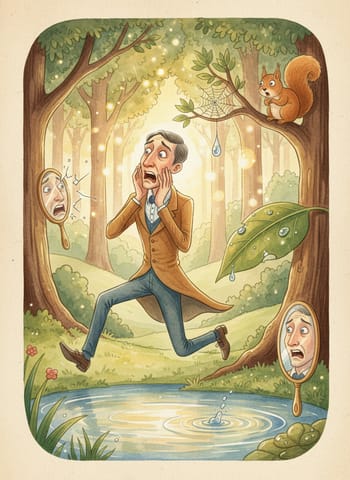
What was he to do—this poor Narcissus? He thought to avoid all such things by going far away from haunts of mankind, where he should never have to face a mirror again. But in the woods to which he retreated a clear rivulet ran. Into this he happened to look and—saw himself again. Angrily he told himself that his eyes had been deluded by an idle fancy. Henceforth he would keep away from the water! This he tried his utmost to do; but who can resist the beauty of a woodland stream? There he was and remained, always with that which he had determined to shun.
ماذا يفعل هذا النرجس المسكين؟ ظن أنه سيتجنب كل هذه الأشياء بالابتعاد عن مساكن البشر، حيث لن يضطر إلى مواجهة مرآة بعد اليوم. لكن في الغابة التي لجأ إليها كان يجري جدول صافٍ. نظر فيه مصادفة فرأى نفسه من جديد. قال لنفسه بغضب إن عينيه خدعهما وهم عابث. سيبتعد من الآن عن الماء! حاول جهده أن يفعل ذلك؛ لكن من يستطيع مقاومة جمال جدول في غابة؟ هكذا ظل هناك، ومعه دائمًا ما عزم على تجنبه.
My meaning is easily seen. It applies to everybody; for everybody takes some joy in harbouring this very error. The man in love with himself stands for the soul of each one of us. All the mirrors wherein he saw himself reflected stand for the faults of other people, in which we really see our own faults though we hate to recognise them as such. As for the brook, that, as every one knows, stands for the book of maxims which the Duke de la Rochefoucauld wrote.
معنى القصة واضح بسهولة. فهي تنطبق على الجميع؛ لأن كل إنسان يجد بعض السعادة في احتضان هذا الخطأ نفسه. الرجل المحب لنفسه يرمز إلى نفس كل واحد منا. وكل المرايا التي رأى فيها انعكاسه ترمز إلى عيوب الآخرين، التي نرى فيها في الحقيقة عيوبنا نحن، مع أننا نكره أن نعترف بها على هذا النحو. أما الجدول فهو، كما يعرف الجميع، يرمز إلى كتاب الحِكَم الذي ألفه الدوق دو لاروشفوكو.